
Lima Resident Lookup Record Coverage
Each record system answers only its own question. The Allen County Public Access GIS publishes current parcel, situs, deed-owner, and mailing fields for land in Lima and across the county. It will not name every person at an address. Ohio's Voter Lookup handles one narrow task: checking a registration result. Court systems place a case within a particular jurisdiction. Probate files, health records, and library and museum collections supply event dates and historical leads instead. Treat any single result narrowly. A record describes one fact about a person, never a whole history.
| Record | What It Can Confirm | Where | Access |
|---|---|---|---|
| GIS parcel data | Published owner, mailing, situs, and parcel context | Allen County Public Access GIS | Free current map and data route |
| Voter registration | A targeted registration, precinct, and polling result | Ohio Voter Lookup and Allen County Board of Elections | First name, last name, and Allen County required |
| Municipal case | A traffic, criminal, or civil case in municipal jurisdiction | Lima Municipal Court | Online modes; coverage start not published |
| Probate and vital lead | Estate, marriage, birth, or death record path | Probate Court or Public Health | Record-specific request and privacy rules |
| Supreme or federal case | A party or docket in that separate court | Ohio eCase or PACER | Court-specific access and coverage |
A land question starts with an address and parcel. Registration questions start with the exact legal name. A known case or citation starts with the court that issued it. For a historical household, use a dated library or archive source first, then ask the custodian who holds the record.
Lima Court Records by Name
The Lima Municipal Court search offers several entry points. Case number, citation, person name, driver license, plate, and business name each get their own mode. Name mode narrows with a date of birth. The screen publishes no starting year, result cap, or column layout. That makes it a tool for confirming a plausible municipal case rather than proving identity or current residence. The court handles traffic, criminal, and civil matters arising in Allen County, at 109 N. Union Street.
The official court search source shows the live screen. Every mode is visible there before a search runs.
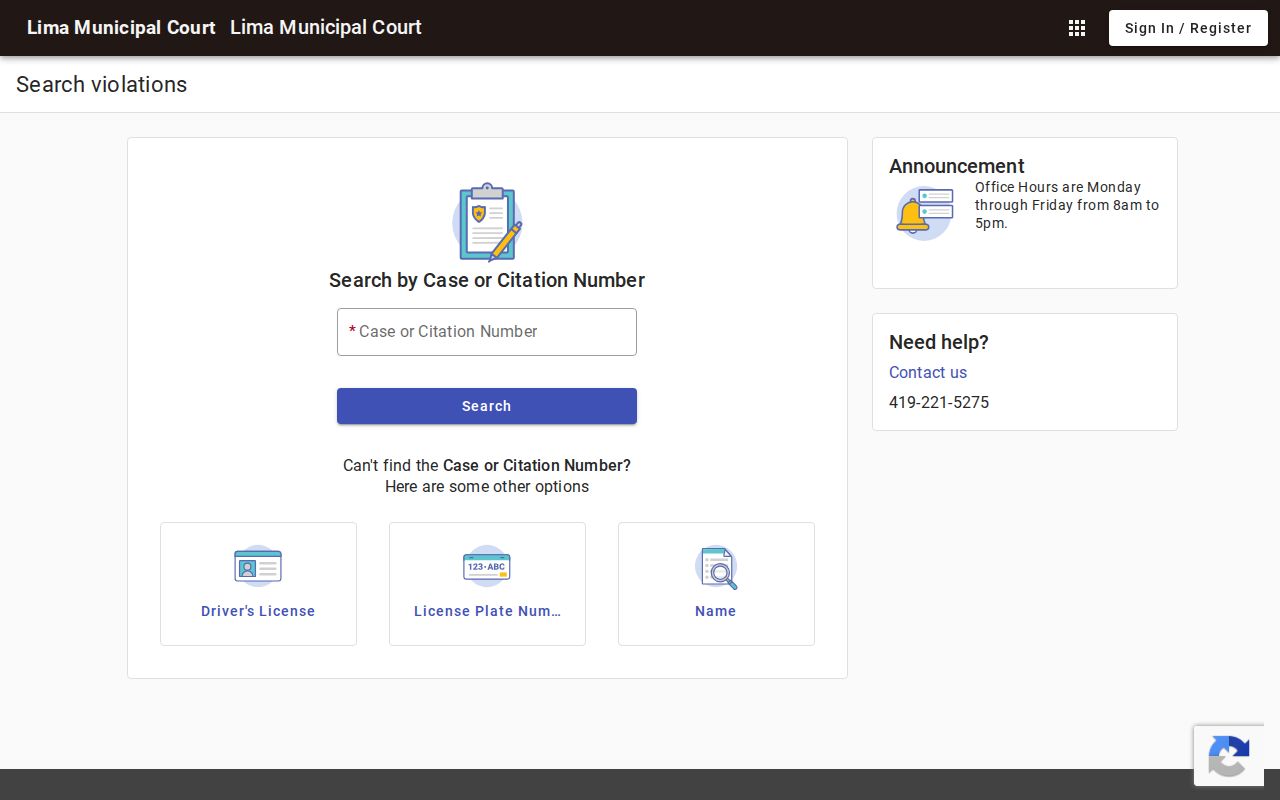
Use the case number route whenever you have one. It is a stronger control than any broad name match. Before requesting a copy, note the court, the case number, the filing date, and the party role.
| Municipal search field | Observed use |
|---|---|
| Case or citation number | Direct lookup for a known case or citation. |
| First and last name | Person-name mode, with optional date of birth to narrow. |
| Driver license or plate | Paired with a jurisdiction or state selector. |
| Business name | Separate business-name mode. |
Note: A result from municipal court covers only that court's files, not a full Allen County or statewide court history.
Lima Resident Registration Checks
Ohio's Voter Lookup puts the person first. It requires a first name, last name, and county, with Allen selected for a Lima question. The return covers a registration result, precinct, and polling information. The page suggests trying former names or spelling variants. Street and address context helps separate similarly named voters. The tool will not build a streetwide roster.
The separate Ohio Data Act voter portal works differently. It publishes county-and-date snapshots rather than a one-name search. Every result depends on the county and date chosen. Snapshots are retained for at least 22 months, and each request spans a maximum of seven days. Field layouts vary by package. For an older or specific election record, contact the Allen County Board of Elections rather than reading a portal absence as final.
Safe at Home participants receive protected registration and address handling. A missing result may reflect protection, a variant spelling, or a source boundary. It is never a cue to combine records and reconstruct a protected address.
Lima Probate Leads by Name
Allen County Probate Court is the place for a named estate. Estate records run from 1835 to the present. Marriage records run from 1831. The computer estate index reaches back only to 1985. A published decedents and estates list starts in 2013 and moved to a Public Portal route in 2025. A gap in the web list proves nothing. Request a case, name, or year through the Court's own request path.
Vital records split between two offices. Allen County Public Health at 219 E. Market Street issues Ohio birth certificates and Allen County death certificates. Probate holds the older local birth and death records, covering 1867 through 1908. The historical and modern paths differ. Ohio Revised Code §3705.23 demands a signed application and fee for any certificate. The same law shields a decedent's Social Security number for five years, except from qualified requesters, and restricts specified birth health information.
The Allen County Clerk of Courts keeps Common Pleas, Domestic Relations, and Third District Court of Appeals files. Those are not Probate or Municipal Court substitutes. Match the record to the office that holds it.
Verifying a Lima Resident Match
A shared surname proves nothing. Record the exact spelling, initials, suffixes, hyphens, and date each source shows. Then compare two facts from independent records. A parcel number and deed date test land. A case number with party role tests a court connection, and an event date with its custodian tests a vital-record lead. This method limits accidental matches and sharpens any later correction request.
- Write down the exact name, source, retrieval date, and one reliable identifier already in hand.
- Use the official route that fits the question, such as Allen GIS for a parcel or Ohio Voter Lookup for a current registration result.
- Confirm the result against a second independent identifier, such as a legal description, case number, party role, or event date.
- Request an existing record from the custodian when the online entry is incomplete, and keep the record number or page with the result.
- Docket
- The chronological list of activity in a court case, such as filings, hearings, and orders.
- Index and image
- An index points to a record. An image is the underlying scanned document when the custodian makes one available.
- Certified copy
- A copy issued and authenticated by the office that holds the original record.
A name surfacing in an old Lima directory or a yellowed newspaper page is only a lead. It carries a date, not proof of a modern match. The Lima city directories give you the historical shelf for checking one entry against another and anchoring the name in its era.
Lima Records Request Routes
When a Lima record is not online, ask the custodian directly. The Clerk's form covers inspection, pickup, mail, and email. It asks for a written description of the record. A case number or date helps when you know one. The fees are published. Paper copies run $0.05 per page, and inspection is free. Certified mailed records cost $1 per page. Emailed records add a $2 transmission fee plus $1 per page. The listed email is recordsrequest@allencountyohio.com. Ohio's Public Records Act backs prompt inspection. It also requires copies within a reasonable period, subject to exemptions. But the law has limits. It never requires an office to create a database. It also never asks an office to decide that two similar names are the same person. Name the case, document type, or date range. Ask for a cost estimate when needed. The Clerk's public-records policy is illustrated at the Allen County Clerk source.
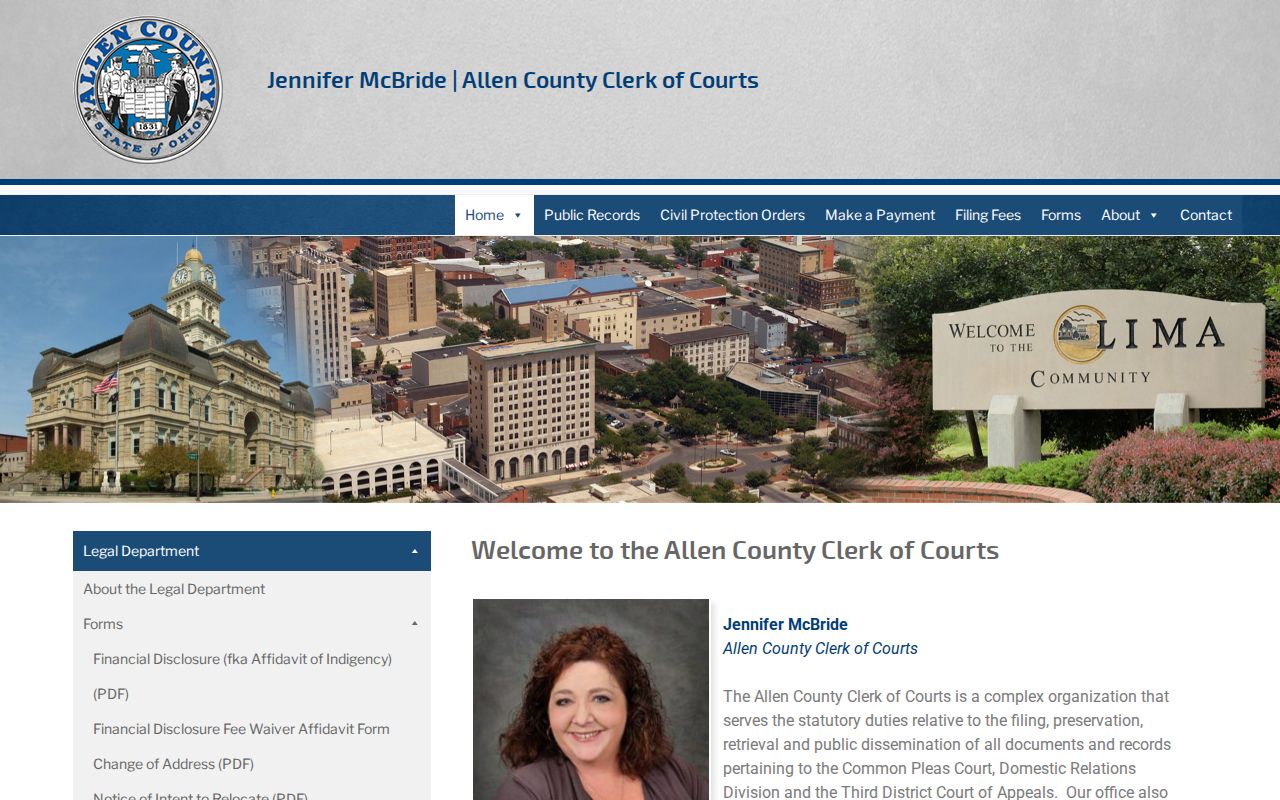
Inspection, pickup, mail, and email are simply different ways to obtain one accessible record. A request cannot unlock a sealed or protected file.
Lima Courts by Jurisdiction
The Ohio Supreme Court's eCase system covers only Supreme Court material. It is not a statewide Common Pleas search. Search options include party, caption, attorney, and case number. Results sort by case number, caption, date filed, status, type, and prior jurisdiction, and the Court dates its cases from January 1, 1985, with practice cases beginning January 1, 1989. Detail tabs include Docket, Parties, Decisions, and Issues. Document links appear where available. The official eCase interface appears at the Ohio Supreme Court source.
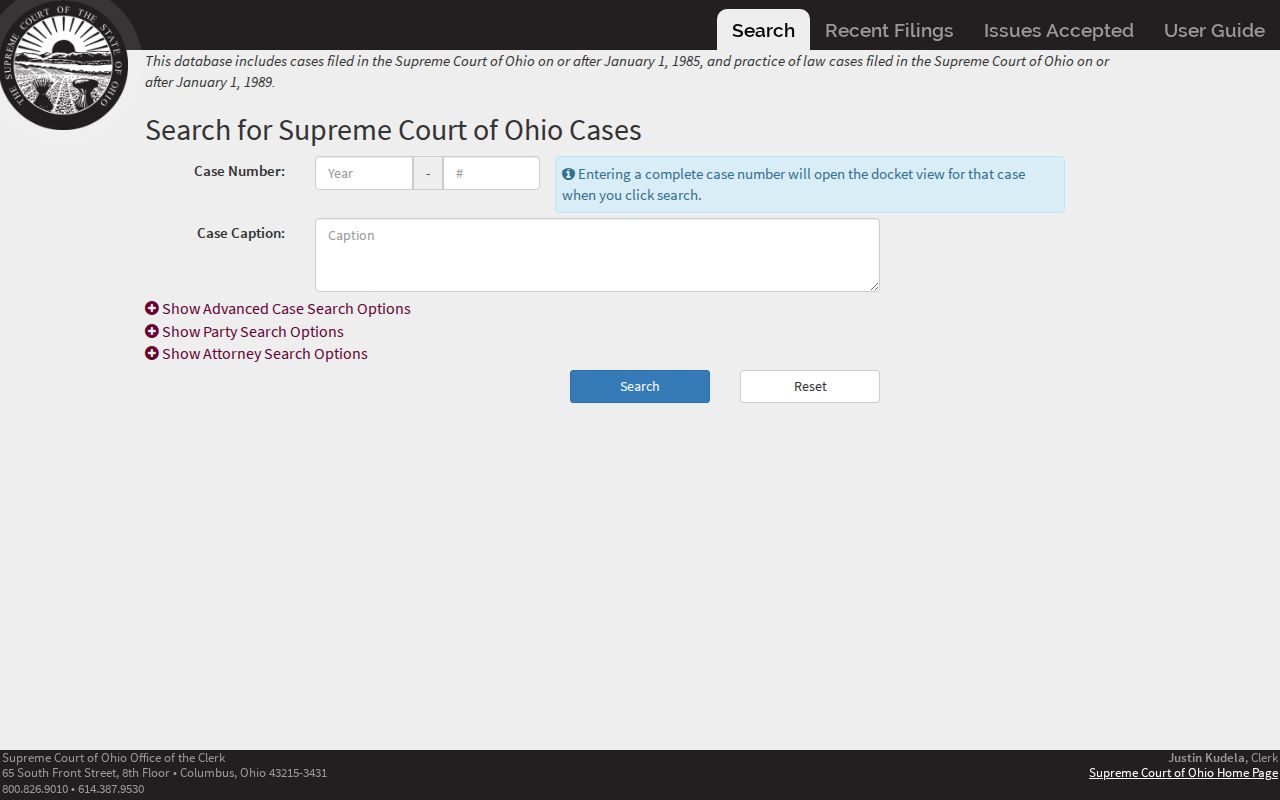
Prior jurisdiction and party role matter here. They keep you from pinning a Supreme Court matter on a similarly named Lima resident without a separate record to support it. When an eCase result appears, the official result model can identify these fields and tabs:
- Case Number, Caption, Date Filed, Status, Type, and Prior Jurisdiction.
- Docket activity and the Parties tab.
- Decisions and Issues tabs.
- Document links when the particular case makes them available.
Federal cases go through the Northern District of Ohio's PACER and CM/ECF route. Nearly all civil cases after July 1, 2000 sit in CM/ECF. PACER charges by the page. The rate is $0.10 per page with a $3 maximum for a document. The court lists ordinary copies at $0.50 per page and certified copies at $11. An account, case number, and division come first. The federal access details are shown at the Northern District court-records source. The court's ordering instructions are there too.
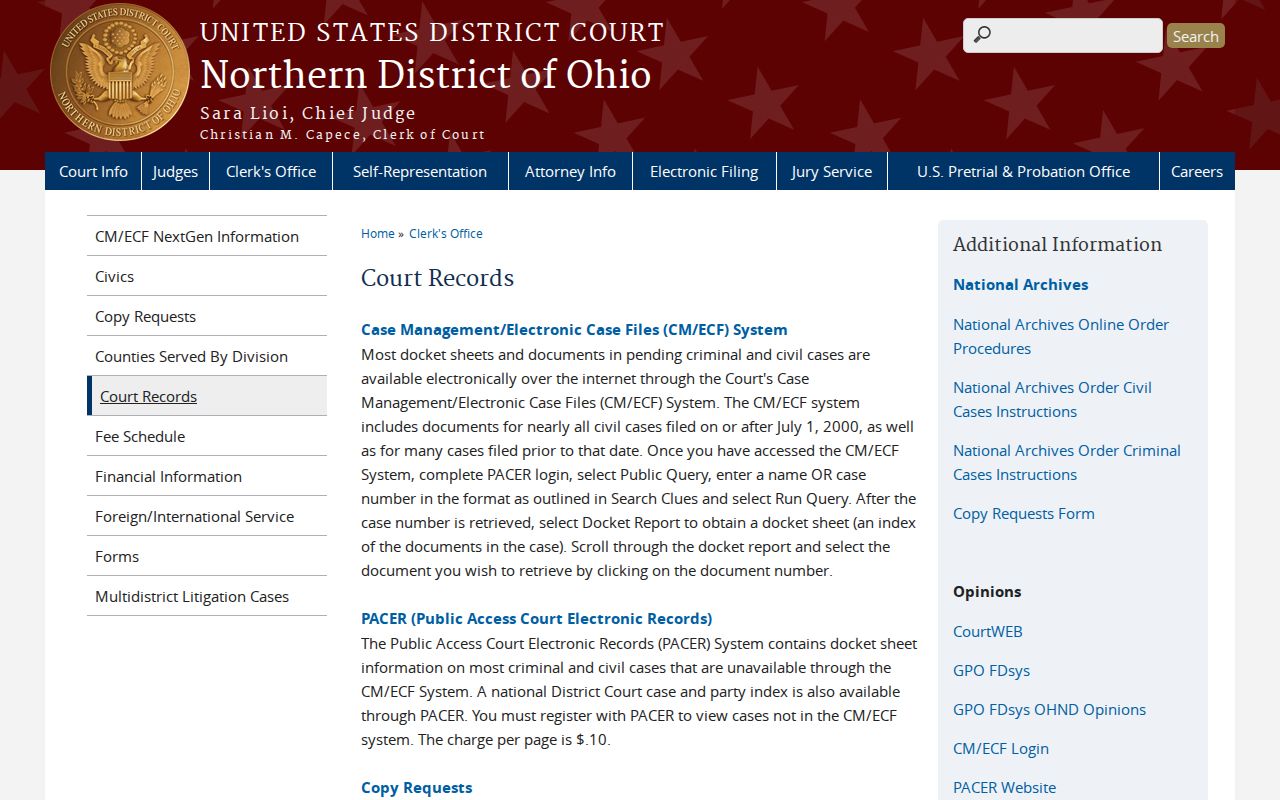
Federal, Supreme Court, municipal, and county systems stay separate. Pick the court with jurisdiction over the specific matter before you search.
Lima Historical Name Sources
A past address or former classmate is a job for the Lima Public Library and the Allen County Museum, not a broad current-record search. The Library holds city directories, phone books, high-school yearbooks, local newspapers, census tools, and Sanborn maps. A focused research service sits there too. The Museum holds vital-statistics extracts from 1842 to 1880. Naturalization material and local files round out its collection. Be specific when you ask. Give a surname variant, an address, a year, and the source type you want. Note the title, year, page, and exact spelling returned. One insider limit matters. The source date defines what an archival hit can establish, so a 1936 WPA Real Property Inventory entry or an 1893 Sanborn sheet supplies property context yet proves nothing about a current household. Pair the old item with a dated custodian record that answers the actual question.
Privacy Limits for Lima Records
Ohio law shields certain identifiers and case files. Safe at Home lets a participant keep a residential address, or a linked property address, off county records after proper notice. Courts can seal, expunge, or restrict material, and juvenile and adoption files get extra protection. Probate treats adoptions and civil commitments as generally nonpublic. Vital records carry the statutory limits in §3705.23, and motor-vehicle data is never a lawful address-research fallback.
Found a mistake in an official Lima record? Bring the exact record identifier and supporting evidence to the office that keeps it. A no-result is not proof that a person is absent from the residents directory. The real barrier may be a date gap, an account requirement, a spelling variation, or a lawful protection. Respect those boundaries rather than working around them through unrelated sources.
Lawful use. Use these records for personal, lawful research and respect protected material. Never use them to stalk, harass, threaten, or intimidate another person.