
Lima City Directory Holdings
The Lima Public Library is the local starting point for city directories and phone books. Its public descriptions confirm those holdings but do not publish a verified shelf-by-shelf list of Lima years, publishers, or reverse-directory volumes. The table separates a confirmed collection from a useful lead. A blank in the local online inventory is not proof that a year is missing. Ask staff to inspect the precise volume or format needed.
| Collection or lead | Verified dates | Where held | Access route |
|---|---|---|---|
| Lima city directories and phone books | Local years not published online | Lima Public Library | Local-history request or main-library research |
| Lima directory microfilm | 1902-1960 | Cleveland Public Library | Separate public-library fallback |
| U.S. City Directories collection | 1749-1990 collection scope | FamilySearch | Confirm the Lima item and year |
| Rural Directory of Allen County Ohio | 1916-1921 | Lima Public Library | Rural and community context |
| Real Property Inventory, City of Lima | 1936 | Lima Public Library | Request by title for address history |
| Lima Times-Democrat selection | 1900-1902, 1905-1907, 1909-1912 | Ohio Memory | Selected digitized issues, not a full run |
These Lima city directory collections should be treated as dated publications, not a single continuous database. Cleveland’s 1902-1960 microfilm listing belongs to Cleveland’s collection. FamilySearch describes a broad national collection, so each result still needs a Lima and year check. No verified Lima publisher sequence, final publication year, or reverse/criss-cross shelf run was found online.
Lima Directory Research Requests
Lima Public Library’s local-history service provides a practical route when an in-person visit is not possible. Give a focused surname or street address, the target years, and the formats to check: city directory, telephone book, or address section if held. Ask for exact text rather than a conclusion. The library lists a $7 deposit for each half hour of research, up to two hours and $28, with five copies included and additional copies at 10 cents each. Results can be delivered by email or standard mail.
Lima Public Library
650 W. Market St., Lima, OH 45801
419-228-5113
Ask for local-history research on a specified name, address, and year range.
A useful request names alternate spellings, asks whether the relevant book has an address section, and asks staff to report the volume title, publisher, year, page, and abbreviation-key meaning. That wording leaves room for the library to say a requested year is unavailable. It also keeps a later comparison with census, maps, or a deed tied to the actual source.
See the library’s local-history policy information before sending a request.
The policy image points to the service channel, not to a published inventory of every Lima volume. Keep the scope of a request narrow enough for staff to check the book and report what they saw.
Note: Record the source year even when the requested entry resembles an address in a later record.
Reading Lima City Directory Clues
No actual Lima directory entry was available online for inspection. That means a responsible transcription cannot promise that every Lima issue shows the same fields or uses the same abbreviations. The Library of Congress explains that city and telephone directories can include names, addresses, telephone numbers, and household details, with publisher-specific variations. Photograph or copy the title page and abbreviation key before assigning meaning to a short mark.
| Entry element | What to capture from an inspected volume |
|---|---|
| Name form | Copy spelling, initials, order, and punctuation exactly as printed. |
| Street address | Preserve the house number and street spelling, if the consulted volume prints them. |
| Telephone or household note | Record it only when printed, with nearby punctuation and wording. |
| Source citation | Keep publication title, publisher, year, page, and the checked abbreviation key. |
| Address section | Ask whether the target-year volume includes one; no local reverse-directory run is verified online. |
- Criss-cross directory
- An address-arranged section that may connect a street address to a listed name. LPL’s online material does not verify which Lima years contain one.
- Householder index
- A list organized around a household or address. Its headings and inclusion rules depend on the specific publication.
- Abbreviation key
- The legend, usually near the front of a volume, that explains its own shortened words and marks.
For a plain explanation of common formats, consult the Library of Congress city-directory guide. The guide supplies context, not a substitute for an inspected Lima entry.
Lima Directory Maps and Property Leads
A directory line can be paired with resources that describe the place at a particular date. Lima Public Library lists a 1936 WPA Real Property Inventory, City of Lima, original-land-entry material, village listings, and a 1916 Farm Journal rural directory. These are separate historical leads. They can clarify a parcel, rural address, or earliest landholder, but they do not turn a directory line into a current residence claim.
The library’s Allen County history collection identifies those titles.
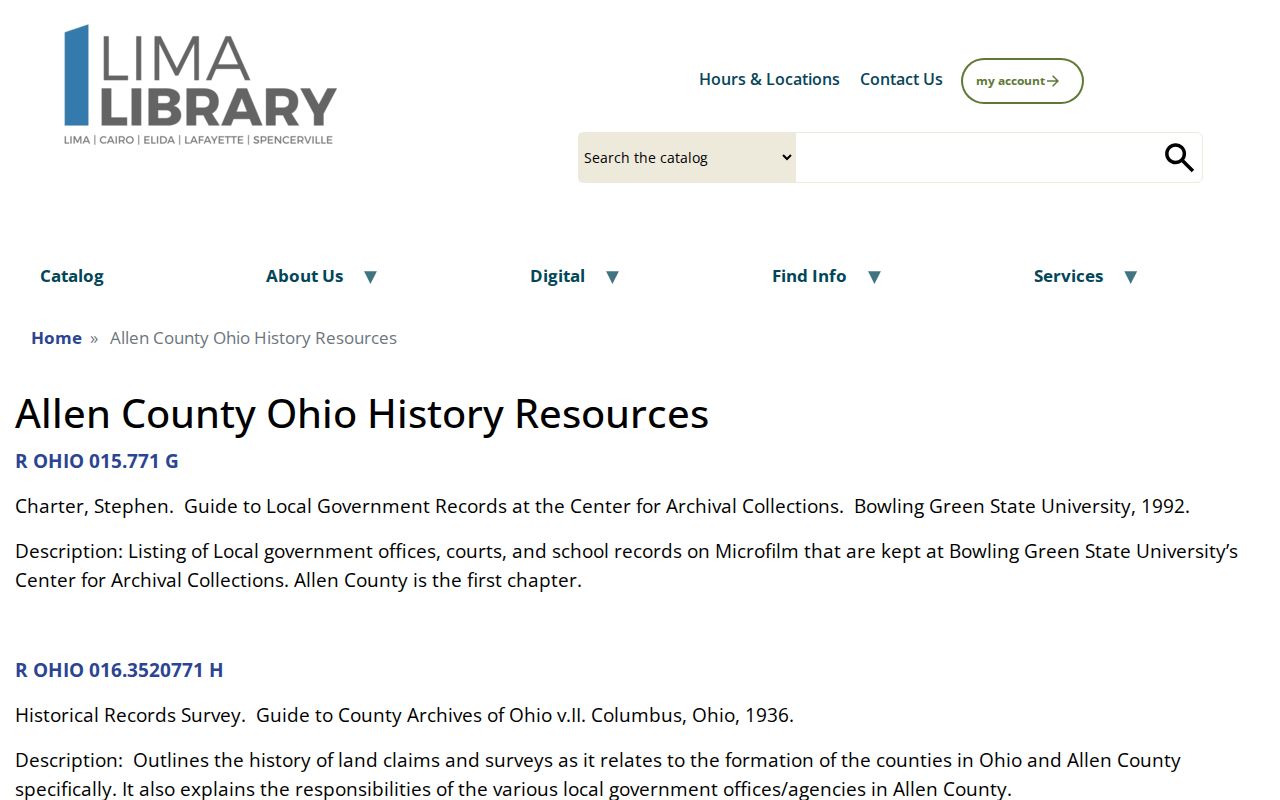
That local-history catalog is especially helpful for choosing a named item to request. Compare its date to the directory year rather than treating all local-history materials as one time period.
For physical street and building context, the Library of Congress holds Lima Sanborn map sets from 1887 with 12 sheets, 1893 with 18 sheets, and 1899 with 33 sheets. Check the actual sheet index and title before tying a directory address to a building or block.
The historic-books collection documents the rural-directory lead.
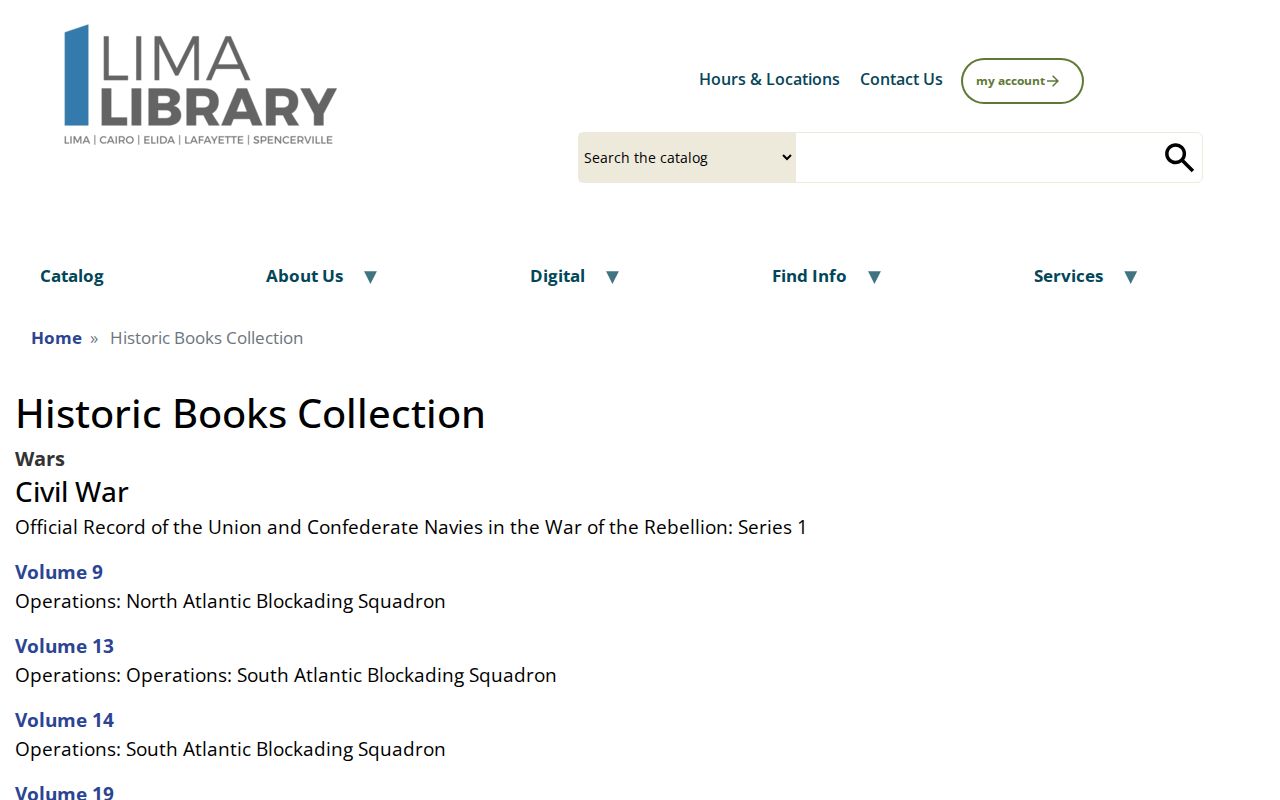
The image supports a title-specific request path. It does not establish that a rural directory is a city directory or that it covers every Lima address.
Lima Archive Newspapers and Naturalizations
The Allen County Museum Archive offers a second local counter for a name-and-date trail. Its newspaper vital-statistics extracts cover Lima from 1842 through 1880, and its naturalization materials include Common Pleas records from 1833 through 1861, Probate material, and Common Pleas material from the 1920s onward. These are useful ways to test name variants, dates, and local context. They are not a searchable Lima city directory index.
Allen County Museum Archive
620 W. Market St., Lima
Tuesday and Friday, 1-5 p.m., and by appointment
rjohnston@allencountymuseum.org
419-222-9426
Collections are noncirculating. Send the archivist a surname, date, place, and the likely record group, then ask for a source citation or appointment. Ohio Memory adds selected Lima Times-Democrat issues for 1900-1902, 1905-1907, and 1909-1912. A missing result in those selected windows says nothing about the years between them.
Use the Museum Archive for archive contact details and source descriptions.
Lima Directory Dates with Gaps
Historical Lima research works best when each item keeps its own date. A directory, newspaper notice, property inventory, map, census schedule, and deed answer different questions. The documented sequence below supplies anchors, not proof of uninterrupted coverage. In particular, no authoritative online source located Lima’s first or last printed city-directory year, a full publisher chronology, or a local digital-conversion date.
| Date or span | Documented Lima research point |
|---|---|
| 1842-1880 | Museum newspaper vital-statistics extracts for Lima. |
| 1887, 1893, 1899 | Library of Congress Sanborn map sets. |
| 1900-1902, 1905-1907, 1909-1912 | Selected digitized Lima Times-Democrat issues. |
| 1916-1921 | Rural Directory of Allen County Ohio. |
| 1936 | WPA Real Property Inventory, City of Lima. |
| Through 1950 | Public federal population census schedules. |
The National Archives census research page confirms that the 1950 census is the newest public population schedule. Census is a dated household snapshot, not an annual substitute for a directory.
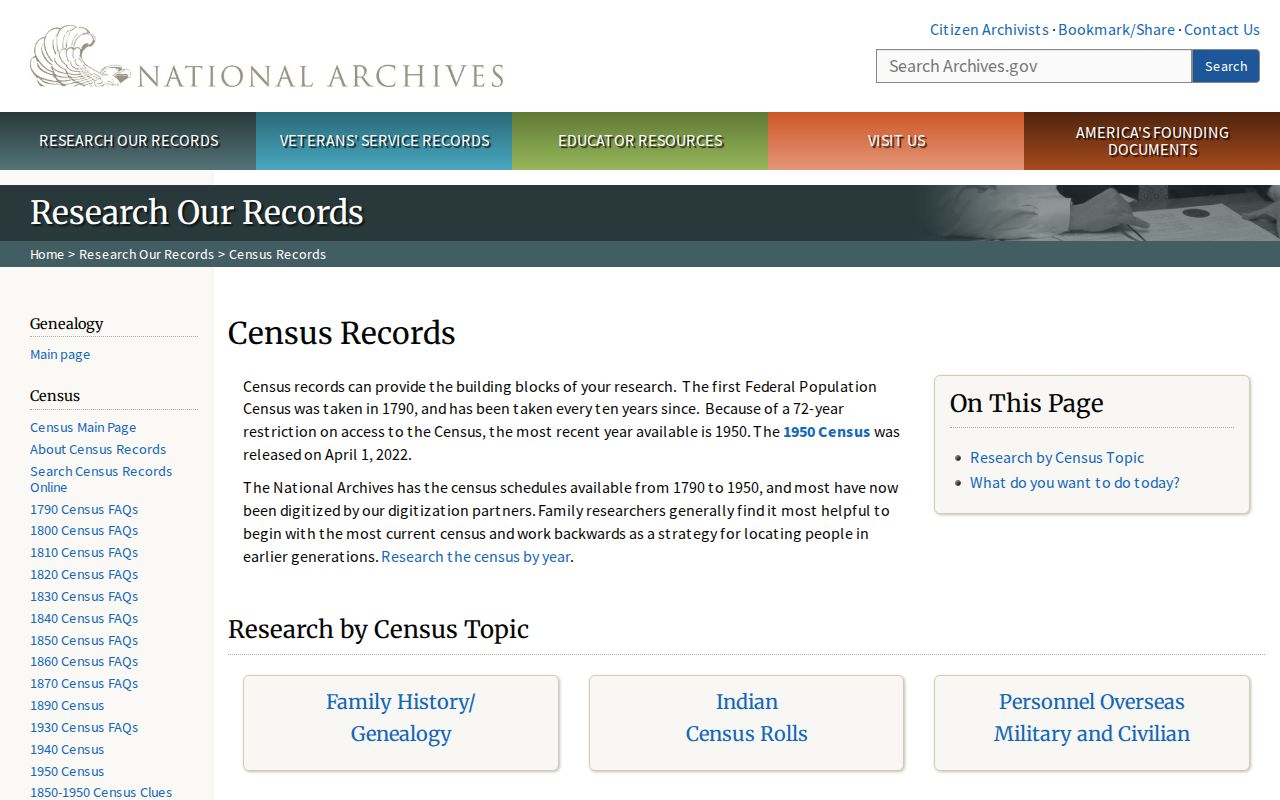
Use the census image as a reminder to compare dates rather than merge them. A street spelling, municipal boundary, or household composition can differ between a census year and a nearby directory issue.
Trace a Lima City Directory Household
A careful household trail begins with one confirmed publication and adds independent sources in date order. The goal is to preserve what each source says, including a disagreement, rather than force a smooth story from similar addresses. A surname can change form, an initial can replace a given name, and a street number can need map or deed context.
- Request the target Lima city directory year, plus one earlier and one later issue if they are held.
- Copy the entry exactly and save the title, publisher, year, page, and abbreviation key.
- Ask whether the same issue includes an address-arranged section, but do not assume that it does.
- Compare the dated address with the nearest public census through 1950 and keep both dates in the notes.
- Use the 1936 inventory, a Sanborn sheet, newspaper extract, or recorded land source only for the question that item can answer.
Absence from one book has several possible explanations: a variant spelling, a different listing practice, a move, or a volume that did not include the person. Confirm the next available issue and a separate dated source before drawing a conclusion. For an old address, a map or legal land description may matter more than a modern street-number match.
Lima City Directory Limits
Lima city directories can support family-history, heir, and local-place research, but a historical listing is not proof of a current address or a complete household. The local web material does not verify every directory year, publisher, or address section. It also does not provide a continuous citywide chronology for street-number changes. Ask LPL, the Museum, the Recorder, or Probate for a specific item when the answer depends on a precise year or record identifier.
Protected addresses, sealed files, and restricted records remain protected. Never try to rebuild a protected location from a directory, parcel, map, or archive fragment, and never use historical material to threaten, stalk, or harass anyone.
Note: For a disputed date or address, preserve each original source and seek the underlying volume, map, or instrument.