
Lima Previous Residents by Era
The right source depends on when a person or parcel connection is being tested. Start with the current physical address, then choose a source that speaks for the actual period. The table separates documented coverage from sources whose local year run or online access has not been published.
| Source | Years it covers | Where held | What it can show |
|---|---|---|---|
| Current GIS parcel data | Weekly current data | Allen County Public Access GIS | Current situs, parcel, tax, sale, and published owner or mailing fields |
| Recorded deeds and plats | Online start not published | Recorder PAXWorld, counter, microfilm, daily register | Recorded parties, document dates, and legal descriptions |
| WPA property inventory | 1936 | Lima Public Library catalog | Address or property lead after the actual item is checked |
| Rural Directory | 1916–1921 | Lima Public Library historic books | Rural Allen County address and community context |
| Sanborn maps | 1887, 1893, 1899 | Library of Congress | Building and street setting in each map year |
| Times-Democrat | Selected 1900–1902, 1905–1907, 1909–1912 | Ohio Memory | Dated local notice or announcement lead |
| Federal census | Through 1950 | National Archives and research libraries | Time-specific household snapshot |
Past residents research should not assign a continuous story to those gaps. A current GIS result is a starting point. A deed establishes a recorded interest on its date. A directory, census, or newspaper citation needs its own date and exact source reference.
Lima Address History Starts Here
Begin with the physical Lima address in Allen County Public Access GIS, using Find Address or map browsing. Preserve the parcel number, tax ID, legal-description lines, situs street, current owner and mailing fields, sale date or amount if shown, plus homestead and tax context. The County describes its parcels and City of Lima owner-data extract as weekly current data. Save the retrieval date with the field text.
A street number is only a discovery key. The legal description, parcel number, lot, or addition name maintains continuity when a lot is divided, combined, renamed, or assigned a different number. Owner and mailing fields are not a list of the people who lived at the address, and a homestead field is a tax indicator rather than a household record.
Lima Deed Chain Backward
After the current parcel is identified, take its legal-description and party clues to the Recorder. The current deed identifies the grantee, the party who acquired the interest. Its grantor is the preceding party in that transaction. Continue backward by looking for the earlier acquisition connected to that party and the same land description. Do not reverse the roles automatically: trusts, estates, correction instruments, and multiple parties can change the apparent pattern.
- Copy the current GIS parcel number, tax ID, legal description, and any lot or subdivision wording exactly.
- Locate the current recorded deed through authorized PAXWorld access or at the Recorder counter. Confirm the document against the parcel description.
- Log the instrument type, recording date, document number or book and page if assigned, grantor, grantee, and every legal-description reference.
- Use the prior party and the same legal description to locate that party's earlier acquisition. Compare spellings, estates, trusts, and parcel changes.
- Repeat one document at a time. When online access does not reach the transfer, use the daily register, microfilm, or office process rather than asserting an online cutoff.
- Grantor
- The party conveying or giving an interest in a recorded instrument.
- Grantee
- The party receiving the interest recorded by that instrument.
- Chain of title
- A dated sequence of recorded land transfers tied together by the same legal land description.
- Legal description
- The lot, subdivision, acreage, or other recorded land wording that can outlast a street-number change.
- Criss-cross directory
- An address-oriented directory format, if the specific library volume actually contains one.
Keep each role and identifier with its own recording date. That log makes it possible to revisit a transfer when the current GIS spelling, a prior deed party, or a plat name does not line up cleanly.
Lima Recorder Access Limits
PAXWorld shows account creation and login before an actual document search. Its visible pre-login screen does not publish the post-login search fields, result coverage, image rules, or online start year. The Recorder cautions that online material is not necessarily an official copy, some sensitive information is masked, and some materials have office-only limits. Treat an online result as a lead to inspect or order the authoritative record.
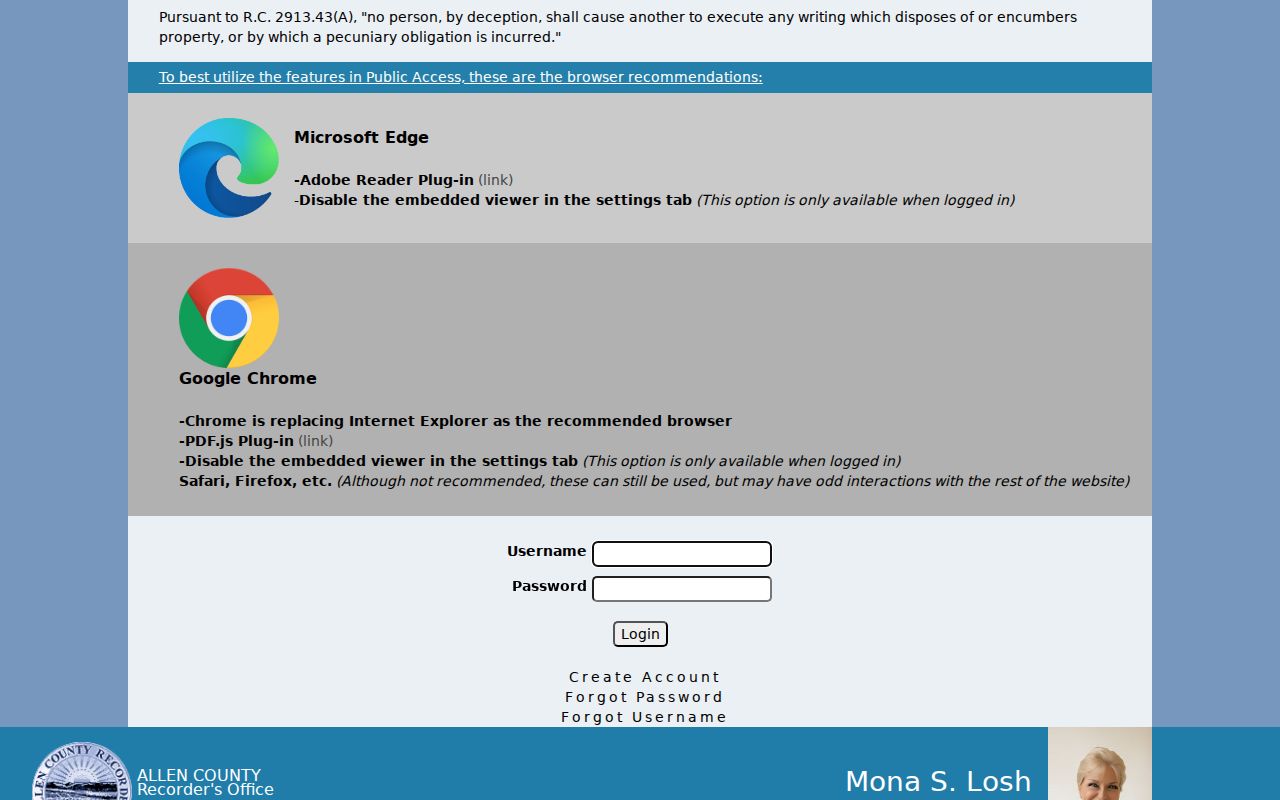
The screenshot documents the account gate. It does not establish the existence, date, or contents of any particular recorded instrument.
The Recorder counter is at 301 N. Main Street, Room 204, Lima. Its daily register of deeds and mortgages is open during business hours, and the office says important documents are on microfilm. Ordinary copies cost $2 per page; a certified copy costs $2 per page plus a $1 seal. Bring the street address, parcel or tax ID, legal description, approximate year, and known spellings to make a narrow request.
Lima Plats Bridge Old Addresses
A plat can restore continuity when an old deed uses a subdivision or addition name instead of a familiar street number. The Recorder's alpha plat index includes “Additions in and Adjoining Lima.” Use the exact addition or subdivision wording from the current parcel or old instrument, then compare the plat with the lot, legal description, and adjoining parcel clues.
This is especially useful when a tract was split or combined. It does not prove that a person lived at the resulting address. The plat identifies land configuration and the recorded chain identifies parties, while a dated directory or census may provide a separate household clue.
Lima WPA Property Lead
Lima Public Library's Allen County history materials catalog a 1936 WPA Real Property Inventory, City of Lima, as well as original land entries and other local-history titles. It is a distinctly local address-history lead, but it was not documented as a general online search system. Ask the Library to check the actual address or property lead and return the item title, year, page, and exact text.
The Library also identifies city directories, phone books, local newspapers, census material, and the 1916–1921 Rural Directory of Allen County Ohio. The rural directory's scope may not match a city-address question. Pair the response with the parcel and deed trail instead of calling a catalog entry proof of a past household.
Note: A source-year property inventory can illuminate its own date, but it cannot fill a missing deed or confirm an undated address change.
Lima Sanborn Map Years
The Library of Congress provides Lima Sanborn sheets for 1887, 1893, and 1899, with 12, 18, and 33 sheets respectively. These three snapshots can show whether a street, block, footprint, or use appeared in the map's own year. Compare each edition separately with a deed, directory, census, or newspaper item from a nearby period.
Maps are valuable because they explain a physical setting when street numbers or lot names are uncertain. They are not a resident list. No authoritative citywide Lima renumbering list was found in the research, so a proposed old-to-new address conversion should remain tied to dated maps, plats, library material, and recorded descriptions.
Lima Household History Flow
Land transfers and household evidence should run in parallel. The Lima Public Library has city directories and phone books, but its public pages do not publish a confirmed local list of directory years or a verified reverse-directory volume. Ask whether the target year has a city, telephone, or address section, and request the exact page, title, publisher, abbreviation key, and spelling. A regular name-first directory can corroborate a known person and address in a specific year; it should not be extrapolated across nearby years.
- Choose a dated parcel or deed event and ask the Library for the nearest directory or phone-book years available.
- Record the item’s exact address, name spelling, page, and publication year. Note whether the entry is name-first or address-first.
- Compare the result with the nearest public federal census, available through 1950, while allowing for enumeration, boundary, and street-number differences.
- Use the matching-year Sanborn map for physical context and a Recorder document or plat for land continuity.
- Keep contradictions visible. A dated directory, census snapshot, and deed party are distinct kinds of evidence.
The Cleveland Public Library guide lists Lima microfilm for 1902–1960 in that institution's collection. It is a useful separate fallback, not proof that Lima Public Library has every one of those years. For broader historical-source context, see the Lima city directories.
Lima Probate and Newspaper Endpoints
The Allen County Probate decedents and estates page is a source lead only after the date and person are matched to address evidence. Probate says estates date from 1835, but its existing online list begins January 1, 2013 and became a Public Portal route for new filings on March 1, 2025. Absence from that web list does not establish that no estate file exists. Request a particular estate or year from the Court.
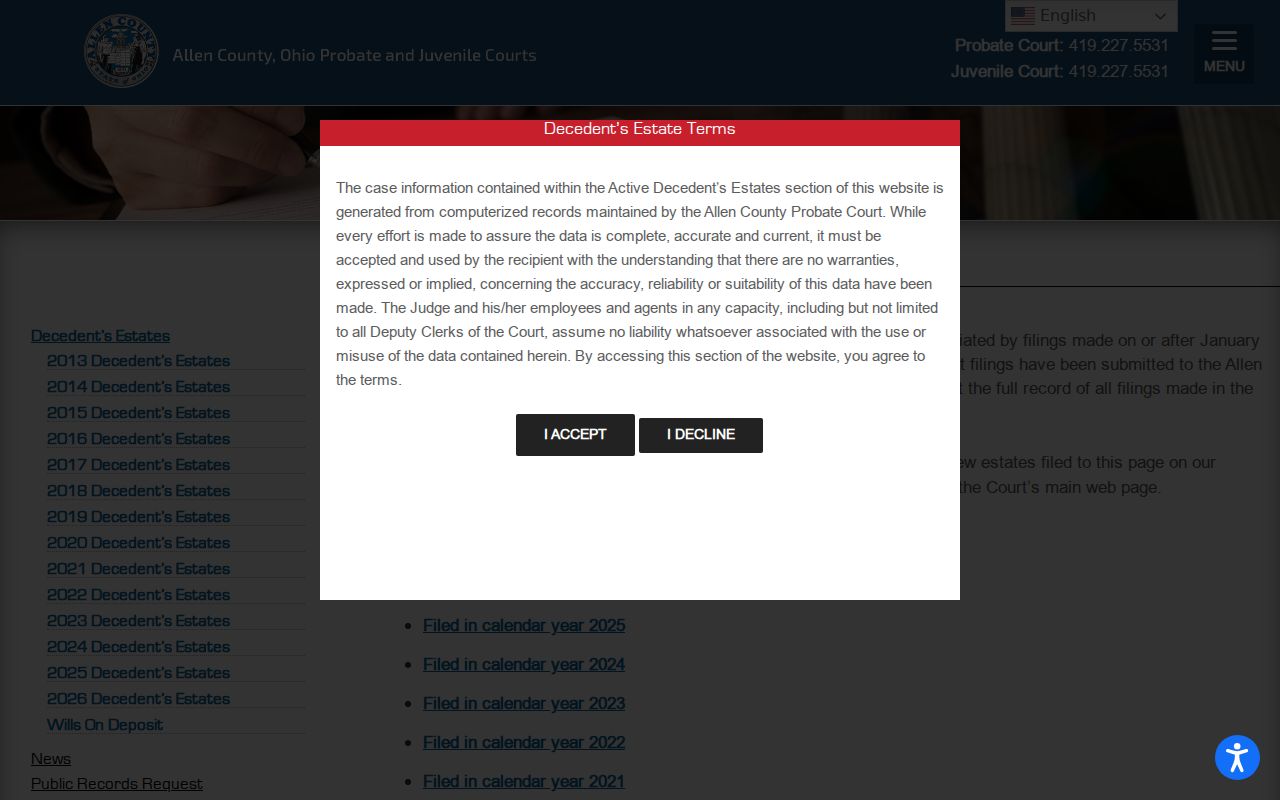
The Probate page is a starting point for a named estate inquiry, with an important coverage warning for earlier records.
The Allen County Museum Archive adds Lima newspaper vital-statistics extracts for 1842–1880 and local naturalization materials. Ohio Memory has selected Lima Times-Democrat runs from 1900–1902, 1905–1907, and 1909–1912. These collections have gaps. Capture the original newspaper date, collection, page or source key, and spelling before connecting a notice to an address history.
Lima Previous Residents Limits
Previous residents research is best used for family history, property history, and carefully dated local research. A deed party may not have lived at the address. A mailing field is correspondence data, not occupancy. A permit applicant, historic directory entry, or newspaper mention also has a limited role. Protected addresses, sealed matters, restricted vital records, and motor-vehicle privacy rules remain outside the address trail.
The Recorder's AlertMe service can send a name-recording alert, but the County says it gives no guarantee. Check any unexpected deed or mortgage notice against the actual Recorder document and official fee schedule before paying a third party or drawing a conclusion.
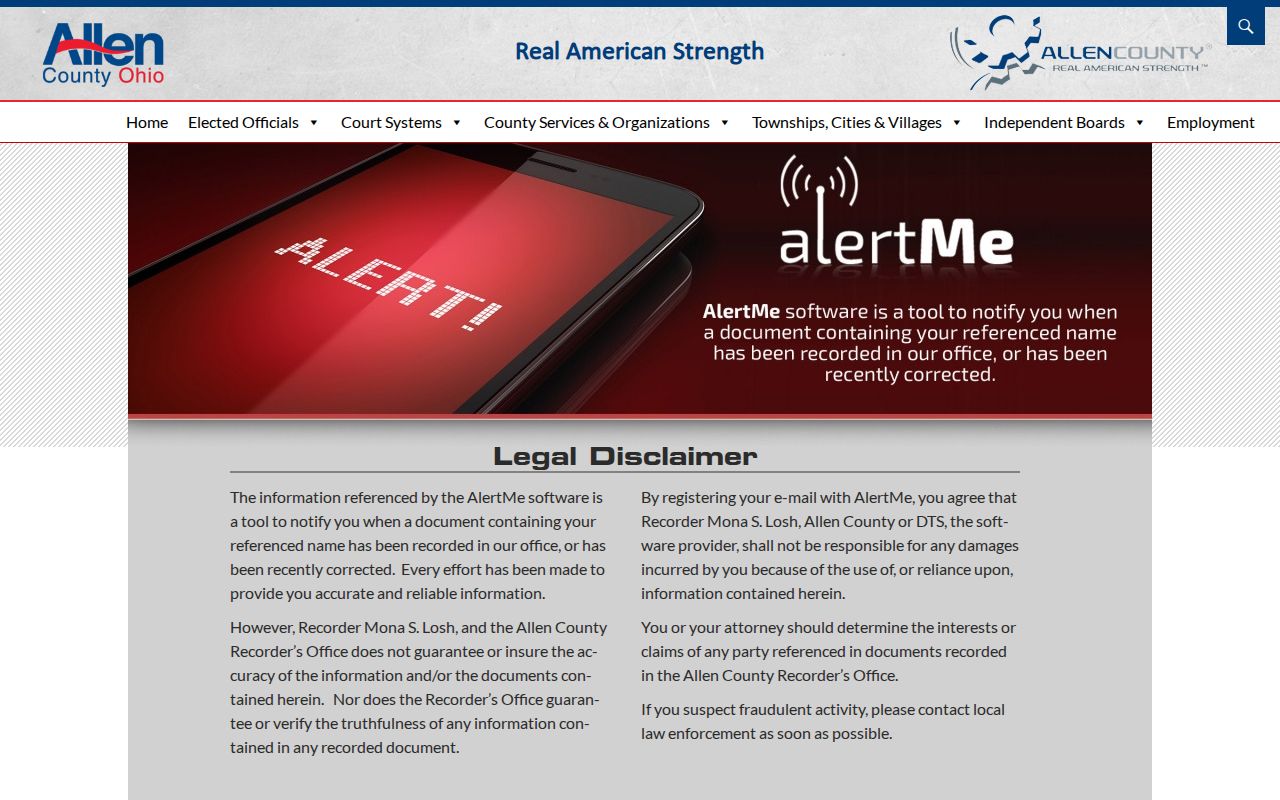
The alert is an early warning convenience. It does not replace a document review or establish ownership, identity, or the history of a Lima address.